
Image Map

Sunday, November 30, 2025

24 Low-Effort Christmas Activities with Teens

One of our most treasured family traditions is our advent calendar. Since my daughters were 2, I've been putting together an advent calendar with a small holiday-related activity to do each day leading up to Christmas. I never thought it would become such an important part of our lives but now, with my girls about to turn 14, they start asking about the calendar several months in advance! Now that my daughters are teenagers our list of activities looks a little different than it did a decade ago- here's what I'm planning to do this year (and you can too with very little prep work).

Because I am all about low-maintenance, especially as a music teacher in December (if you know you know), most of the things are things that might normally be considered "chores", like decorating and sending cards, but now they are fun family activities! It's a great way to really focus on the small joys of the holiday. Here is a list of what we're doing this year:

1. Put up and decorate the tree

2. Make wish lists

3. Hang Christmas lights

4. Make lists of what to give

5. Make cookie dough and put it in the fridge

6. Bake and decorate cookies

7. Put up the rest of the Christmas decor around the house

8. Walk around a town with lots of lights

9. Shop for presents

10. Decorate the front door (we have a wreath, window clings, and flag)

11. Make Christmas cards (my girls love giving handmade cards)

12. Wear matching new Christmas socks

13. Make roasted nuts and peppermint bark

14. Strawberry matcha overnight oats for breakfast

15. Christmas song karaoke with their grandparents

16. Put together teacher gifts

17. Hot cocoa with breakfast (everyone adds their own favorite flavors/ toppings)

18. Hang the stockings

19. Wrap gifts

20. Family secret santa gift exchange

21. Make gingerbread houses

22. Christmas party with the girls' friends (cookies, Christmas movie, Christmas tree pizzas)

23. Play Christmas games (Christmas UNO: sing a Christmas song for every green card you play, eat a marshmallow for every red card, Christmas Categories, Moose Match Mayhem)

24. Put out cookies for Santa

This kind of Christmas countdown / advent activity calendar is so easy to set up because the activities are low-prep, low-mess, quick activities, most of which are things families celebrating Christmas would do anyway. If you want to do something similar this year but don't have time to make a calendar, all you really have to do is write down each activity on a piece of paper and fold it up with the number for the date you want to do it on the outside. Then open a paper each day to reveal that day's activity!

Here is how I made the calendar we use every year (so easy if you have the supplies)- click the image to see the tutorial:
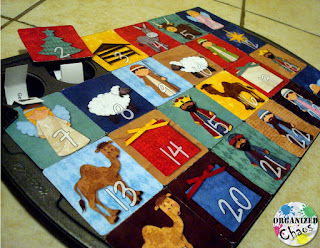
And you can see how my list of activities has evolved over the years as my daughters get older in these posts from previous years: my list for 11 year oldsfor 9 year oldsfor 7 year oldsfor 6 year oldsfor 5 year oldsfor 4 year olds, and for 3 year olds.

If you're looking for ways to add a little cheer without a lot of effort I hope these ideas will help! 

Tuesday, November 25, 2025

My Favorite Partner Songs

I've realized I have a bit of an obsession with partner songs. I think it's so cool to figure out songs that sound good together, and when my students are able to sing them successfully it is so exciting! Today I'm sharing some of my favorite partner songs to use in my elementary music lessons.

I've written before about my entire step-by-step process for introducing partner songs for the very first time, including the song I use for their first time singing a partner song, in this post, but here are some more favorites I use to practice partner singing (mostly in 4th grade).

1. No One/ Waka Waka

I love this combination because it uses more modern music and the 2 songs are so different, but they fit together so well! Sing the chorus of "No One" by Alicia Keys (0:53-1:15 in this video) with the chorus of Shakira's "Waka Waka" (sing 0:51-0:59 in this video two times). I definitely date myself with these songs- these days my students are not really familiar with the songs- but they usually know the artists so that keeps it interesting for my 4th graders.

2. This Train/ Swing Low/ O When the Saints

I don't know what it is about these songs but my students always enjoy singing these 3 together, and if you are looking to incorporate some spirituals this is an easy and accessible way to do it. This video is a great demonstration that includes "I'm Gonna Sing", which I don't use because it's a little too overtly religious for me to feel comfortable using it, but you can see how they all fit together.

3. I Love the Mountains/ Heart and Soul

I love using "I Love the Mountains" to teach canon singing in 3rd grade so when I realized that the melody for "Heart and Soul" worked as a partner song I knew I wanted to use it with my 4th graders! The trouble is the lyrics for "Heart and Soul" are way too lovey dovey for my students to want to sing, so I changed the lyrics to go along with the words from "I Love the Mountains":

Where I live there's lots of sidewalks and

Houses too and maybe some little gardens

At least I'm here with you

And you and you and you!

I'd love to hear your favorite partner songs to use with your students- I know there are a lot more I've enjoyed over the years, these are just the ones that are in my current rotation! And if you want to see the full lesson plans for these songs, and how I build up to singing partner songs so my 4th graders can do it successfully, you can find my full curriculum materials here.

Tuesday, November 18, 2025

My Favorite Canon Songs

I've been teaching my 3rd graders to sing in canon and I remembered how much I love singing rounds! If you're looking for some fun canons to use in elementary music lessons to teach beginning canon singing, here are some of my favorites that my students love every year.


I've written before about my entire step-by-step process for introducing canon singing for the very first time, including the song I use for their first canon, in this post, but here are some more favorites I use to practice canon singing, along with the motions I always do with them to help each group stay on their part.

1. Fast Food Canon

This one is hilarious, especially with the motions (and the all-important facial expressions) that I use! I always have my students start my copying my motions while they listen to me sing it first, and they always end up laughing by the end of the song when they hear me sing it. 


2. I Love the Mountains

I had several students' eyes light up when we sang this in canon for the first time this year. The harmonies are just so pretty when you sing it in a round! 


3. Boots of Shining Leather

I actually just wrote an entire post on this song and the lessons I use with it- I use it to review canon singing in 4th grade before we jump into partner songs, and this one is definitely another favorite!


Bonus songs:

I use these other songs in canon at other points in my curriculum, or even in my choir class as a warmup, rather than specifically for the purpose of practicing canon singing, but they're great songs that you could certainly use for that purpose if you're looking for more (the links will take you to more detailed descriptions of the songs and lessons I use with each)!


I'd love to hear your favorite canons to use with your students- I know there are a lot more I've enjoyed over the years, these are just the ones that are in my current rotation! And if you want to see the full lesson plans for all of these songs, and how I build up to singing in canon so my 3rd graders can do it successfully, you can find my full curriculum materials here.

Tuesday, November 11, 2025

Teaching Measure Lines

With the rise of the rhythm play-along videos since the pandemic, I realized a couple of years ago that my students no longer understood the concept of a measure or a measure line when reading full music notation. It's a small thing that I didn't miss until it was gone, and over the last couple of years have been working to recover! Here are some very simple tips for bringing back the measure line.

I realized my students were missing some important learning when my 3rd graders who were learning a new song on recorder asked me what kind of rhythm those vertical lines were. I hadn't realized it at the time, but a lot of my composition worksheets just have 1 measure per line (or just 1 measure total) so it's big enough for young students' larger writing, I use rhythm play-along videos that have each beat in a box rather than using measure lines, and when they were using manipulatives to compose I would have them put each measure on its own line. They had no idea what a measure line was because I never used them!

Here are a few simple ways I started incorporating measure lines into rhythm notation practice. After making these small tweaks for the last year and a half or so, my students no longer stumble over the measure lines when we get to a fully notated melody (it's really not a very difficult concept as long as you don't completely forget about them like I did!).

1. Popsicle Sticks

When I have students use composition manipulatives like these cards, I give them popsicle sticks and have them use those as the measure lines and place the manipulatives on the floor or staff lines with at least 2 measures in a row so they can see how the popsicle stick measure line divides the groups of beats.

2. Worksheets

I actually intentionally kept my composition worksheets that have one measure per line the same. The first thing I have students do now when I am having them write a rhythm or melody is write in the measure lines themselves to divide each line into at least 2 measures. They still have plenty of room for the rhythms they are writing even with the lines divided in half!

3. Rhythm Practice Examples

The latest change I have been working on making is replacing some of the rhythm practice visuals I use that look like this:


Instead of having each measure in a different colored box, I'm putting the notes on a single line staff and adding measure lines, like this:


Small changes like these have made measure lines very straightforward for my students, and it really doesn't seem to create any added difficulty for them either. I have really noticed a big difference in my students' ability to read full musical notation by making sure I'm incorporating more elements like measure lines in our regular practice!

Tuesday, November 4, 2025

Boots of Shining Leather: modern movement

I love using the song "Boots of Shining Leather" to introduce ti with my 4th graders. Last year my 4th graders were very challenging to engage, so I was determined to make the song, and the circle dance I've always had students do with it, feel a little more modern to get better buy in. And it worked! After teaching the same movement with the song again this year, I thought it was time to share for anyone else looking to update their lessons to make it more relevant.

I like using the song "Boots of Shining Leather" to teach ti for a lot of reasons, especially because it is perfect to use to review canon singing, which leads into learning partner singing, and I use it to also introduce accelerando and ritardando, which the song lends itself well to. But the different movement / folk dances I had seen used with the song felt very outdated and boring. I also found that the movements were often to similar in the different parts of the song, which makes it a bit counterproductive, because adding a movement component is really helpful for helping each group keep track of where they are when they sing in canon. And some of the movements don't really move with the beat, which doesn't work well when I'm using the song to practice tempo. 

So for those reasons I knew I wanted to update the movements, and last year this is what I came up with. It has been very successful 2 years in a row- in fact, my 4th graders told me last week that they had been singing and doing the dance outside at recess after we did it in class! That's always the ultimate sign of a win in my book, especially with the upper grades!

I hope you'll consider trying out this version, or even get inspired to add your own spin on movement for upper elementary students. It has not only been engaging and fun for my students but it has significantly improved their learning because of the more obvious beat, differentiated movements for each phrase, and motions that match the lyrics. If you aren't familiar with the song, there are a few versions out there but this is the one I use:


If you want to learn more about my lessons using the song, and how I introduce and practice the solfege, here is my post on that. And of course all of the details and materials for the lessons are in my 4th grade curriculum!