Image Map

Tuesday, October 4, 2022

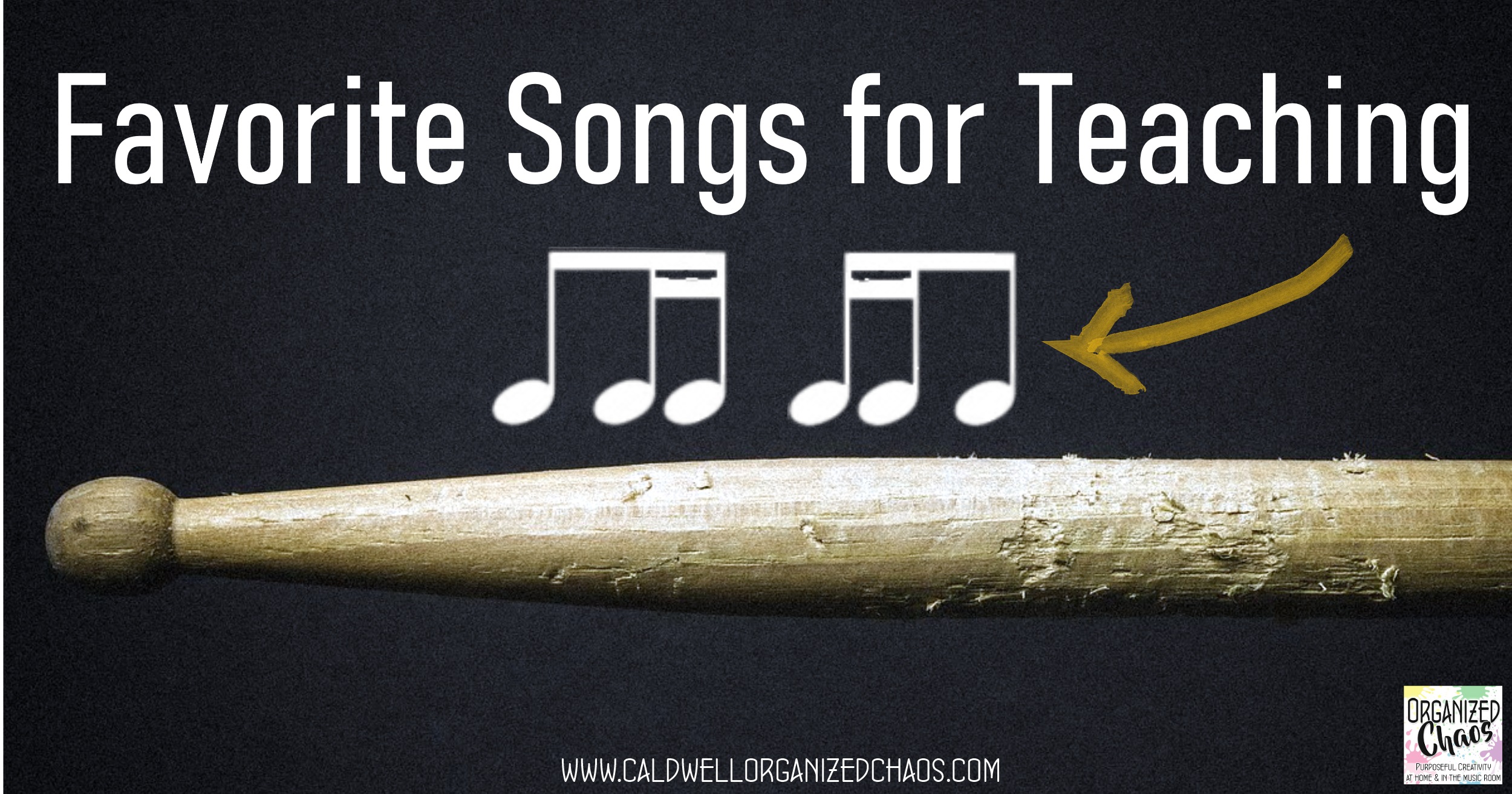
Favorite Songs for Practicing Eighth / Sixteenth Combinations

I have been on a quest the last couple of years to find new songs for practicing eighth note / sixteenth note combination rhythms, and today I want to share a couple of my latest favorites. Both of these songs include both types of combinations in the same song, so they are best to use for practicing these rhythms after students have been introduced to them separately. 

Has anyone else found it difficult to find solid resources for teaching eighth / sixteenth note combination rhythms (  and  )? We have these rhythms in our 5th grade general music curriculum and I've never been truly happy with the songs I had for practicing them. But I now have two songs that I've found have worked well with my students that I can't wait to share with you: Let Her Go, and Bim Bum.

Bim Bum

I found Bim Bum a couple of years ago, just before the pandemic hit, and it has been a crowd favorite. This is perfect for those "too cool to sing in class" upper elementary students because it has a challenging game to go with it. I first show them the body percussion pattern while I sing it and have them try to do just the body percussion, which goes like this:


Once they get the hang of it I start gradually speeding up and tell them they have to sit down if they make a mistake. Once they are good enough at the body percussion, I challenge them to sing while doing it to make it harder, and I end with a showdown contest to see who can go the fastest without messing up (I tell them every year the true story of one student who beat me, and that nobody has been able to beat me since, and that gets them excited for the challenge). I seriously catch them every year singing the song and doing the game at recess and their homeroom teachers tell me they practice in their rooms too! Once they have internalized the song I have them decode the rhythms in the melody to find the "1-e-and" and "1-and-a" rhythm patterns and practice counting and clapping the melodic rhythm.

Let Her Go

I've been searching for a more modern song that uses these rhythms for several years and this fall I finally found Let Her Go by Passenger. I'm still on the hunt for a more recent song to use as an example (this one was released in 2012), but this one was a good addition this year to give students an example of music that uses these rhythms in a more relatable genre. I just played the first section of the song, had students sing along while patting the beat, and had them decode the rhythms in the first line to identify the two eighth / sixteenth note combinations. This is a good one to use as students are first learning both rhythms because both combinations are right there in the very beginning of the melody!

Do you have other favorite songs for practicing both sets of sixteenth / eighth note combination rhythms with elementary students? I'd love to hear your other ideas, especially if you have any more recent songs that you've found! Let me know in the comments what other songs you use that include both combinations. If you want to see my favorite lessons for teaching other specific rhythmic elements, you'll find them all in this post:


Tuesday, September 27, 2022

Favorite Lesson for Teaching Sixteenth Notes

Something about teaching barred sixteenth notes is always so much fun. I think students get a kick out of singing and playing fast notes and the 4 barred sixteenth notes look "fancy" to them, so it's inherently exciting :) Today I'm sharing my favorite way to introduce and practice barred sixteenth notes for the first time.

I teach sixteenth notes in 4th grade in my current district, and by the time I get to introducing them they have already experienced them, without labeling them, many times in 2nd and 3rd grade. The song I like to use to introduce it is Ding Dong Diggidiggidong. I love this song because it is perfect for practicing other concepts and skills my 4th graders need to review from 3rd grade as well: singing rounds, and pentatonic solfege. It's also quick and easy to learn and easy to sing. 

I first teach them to sing the song by having them pat the beat while they listen, and then practicing singing it in canon to get them more familiar with the song. Then we review pentatonic solfege and decode the melody. Now that they've spent significant time with the song, I ask them to identify how many sounds are in each beat, and they quickly discover there are several beats with 4 sounds all in one beat! That's when I show them what 4 barred sixteenth notes look like and we practice counting them in a few example rhythm patterns.

But my favorite part is having them practice playing the melody on xylophones! We remove the F and B bars (burgers and fries) and I have them figure out the notes with a partner, using what we've already discussed about the solfege of the melody. They are so proud of themselves when they can play the whole thing, and it sounds instantly amazing when we play it in canon! Some years when I have the time we take it one step further and add some ostinati- because it's pentatonic pretty much anything goes, honestly, but here's one example of how you can put it together, and there's also an arrangement in Orff and Keetman's Music for Children Volume I.

Of course there are lots of other great songs with sixteenth notes that we use to practice them throughout the year, but this is definitely my favorite song to use to introduce them! What is your favorite song for introducing barred sixteenth notes? I'd love to hear more of your favorites in the comments below. And if you want to see my favorite lessons for teaching other specific rhythmic elements, you'll find them all in this post:


Tuesday, September 20, 2022

Posting Lesson Objectives

Today's post is a simple one: after getting several questions about my lesson objectives boards I realized I never specifically explained them anywhere on my blog! If you're looking for a simple way to post lesson objectives or "I can" statements for multiple grades, here's how I do it.

This post contains affiliate link(s). This post is not sponsored.

This is perhaps one of the easiest DIY projects I've ever done: I teach seven grade levels, so I went to the dollar store and got seven picture frames, then got scrapbook paper in seven different colors. I cut each piece of paper to the size of the frame, put a sticker in the corner to indicate the grade level, and stuck it inside the frame instead of a photo. Ta-da! 


Over the years I've changed out the poster above the frames, and added one of these pen holders to keep a dry erase marker nearby, but the frames have stayed the exact same for almost a decade now! Actually the color paper I ended up choosing for the frames have become my designated colors for those grade levels in everything else: in my lesson planner, drawer organizer, grade level expectation posters, etc. So they may seem small and insignificant but they have had a big impact!

I like being able to write the objectives in dry erase instead of printing out signs and posting those, because it's much quicker for me to handwrite and I can add/ remove/ tweak things more easily as I go. And I know some teachers like to have the objectives in their lesson slides, but I've found I prefer having them posted separately somewhere where any administrator can see them no matter when they come in my room, and students can see what other grades are working on (they do sometimes comment on that, actually).

I hope this helps you if you're looking for an easy way to post your objectives in your classroom! If you want to see what the rest of my classroom looks like, here's my latest classroom tour for the 2022-2023 school year. And if you want a copy of the poster I have above the frames (and any of the other coordinating posters I use all over my classroom), you can find it in this set with the rules and procedures posters.

Tuesday, September 13, 2022

Latine / Hispanic Heritage Month in the Music Room

Latine/ Hispanic Heritage Month is celebrated from September 15- October 15 in the United States, and today I want to share some ideas for recognizing it in the music room, as well as some culture bearers to follow to learn more about Latine / Hispanic heritage and culture for yourself. Although this month should not be the only time we incorporate Latine / Hispanic culture and people into our classrooms, it's a great opportunity to shine the spotlight on an under-represented people group and celebrate the contributions of important artists and elements of Latine / Hispanic culture!

First a quick word about terminology: although it may be a bit more cumbersome I'm using both the terms Latine and Hispanic in this post. I've learned from listening to culture bearers that there are many historical, cultural, and linguistic factors that play into individual preferences for the terminology they use to refer to themselves, so I'm choosing to include both here. If you are from outside the culture I encourage you to listen to what individuals choose to use and mirror their language when you speak with / about them.

1. Artists to Feature

One way to celebrate Latine / Hispanic Heritage Month is to introduce students to some important Latine / Hispanic American musicians. Of course there are many more, but here are some examples to get you started, with a link to a song you could use in class:

Selena Quintanilla-Pérez

Tito Puente

Carlos Santana (note this is his version of a song by Tito Puente- I like to tie them together)

Pitbull

Jennifer Lopez

2. Books

There are so many wonderful books featuring Latine / Hispanic characters and heritage that are perfect tie-in's to music lessons! Here are a few of my favorites, with a link to a read-aloud or ebook for each:

From Across the Street

Rosa's Song

Drum Dream Girl

Dancing Hands

Danza!

3. Puerto Rico

I've heard some differing opinions on whether Puerto Rico should be represented as part of Latine / Hispanic Heritage Month- there is in fact a separate Puerto Rican Heritage Month in November in New York. But from most Puerto Rican and other Latine / Hispanic people I've spoken to, it's my understanding that it's appropriate and important to include Puerto Rico in Latine / Hispanic Heritage Month recognitions. And regardless of when it happens, it's important for US American students to gain an understanding of Puerto Rico in particular. I still have a lot to learn myself, and I certainly can't cover everything that should be said in this brief mention here, but here is an article that gives an overview of Puerto Rican music, and here's a lesson plan for a Puerto Rican children's song with an accompanying game that's perfect for lower elementary:

4.  Culture Bearers to Follow

As with any post like this, I've just barely scratched the surface here for incorporating Latine / Hispanic Heritage Month in music class, but as someone outside Latine / Hispanic American culture my hope is to encourage you to find ways to incorporate it into your teaching, and to seek out culture bearers to learn more from, and compensate when you can, directly. Here are a few Latine / Hispanic music teachers I follow and am learning from myself, with links to their Instagram accounts:

Wanda Vasquez Garcia

Juliana Dueñas Lopez

Nora Hernández

Ani Silva-Berrios

Martin Urbach

Juan Carlos Tavarez

What are some other ways you recognize Latine / Hispanic Heritage Month in your music classes? I'd love to hear more ideas and resources in the comments below!