Image Map
Showing posts with label Supplies. Show all posts

Tuesday, August 18, 2026

Making the Most of What You Have

With public school budgets, and music program budgets in particular, continuing to get tighter and tighter, it is so important to be able to make the most of the instruments, equipment, and supplies that we have in our elementary music classrooms. Whether you've got an instrument or item that you inherited from a previous teacher that you don't know how to use in your lessons, or you're looking for fresh ways to use what you have, here are all my lesson ideas to stretch your instruments and supplies to use with a broader range of grade levels, organization and management tips to help make it easier to use those things you were too afraid to give your students, and creative ways to use what you have in ways you may not have thought of before.

I've written quite a few posts over the last year or so with all of my best management and organization tips and tons of lesson ideas and teaching strategies for using various items that are commonly found in many elementary music classrooms, and if and when I write new posts for this series I will add them here, so bookmark this page and let me know in the comments which instruments or supplies you need more ideas for how to use better in your teaching!


Tuesday, June 30, 2026

Music Teacher Planner Setup 2026-2027

I get questions all the time about the supplies I use to set up my teacher planner, so today I'm giving you a full update on everything I'm using for the upcoming school year. The nice thing is most things I use for many years so I get my money's worth, and every year I tweak a few little things here and there so I still get to enjoy the fun of putting together a fresh new planner every summer!

*this post contains affiliate links*

1. Cover and discs


You can get hard covers like the one I have from a few different places but the one I have right now is from The Happy Planner. Honestly when my planner cover starts to get beat up after several years and it needs to be replaced, I look for one from any brand that I can find on clearance and get that one! This one is pretty similar to the one I'm using. I love these Happy Planner Rainbow Expander Metal Discs. The colors are just so fun and because they are metal they are so sturdy! I've been using them for several years now with very little sign of wear.

2. Paper


You don't have to have a fancy hard cover or rainbow colored discs to set up a teacher planner like this, but you will definitely need a hole punch to be able to put your papers into a discbound planner! Someone gave me the hole punch I'm using now from The Happy Planner but I used this one, which is much cheaper, for years with no issues.

This may surprise you but I think the biggest difference between a printable planner that feels cheap and one that feels professional is the paper. If you get 24lb paper to print at home you will notice a huge difference, and it's really not that much more expensive! Here's the paper I'm using right now.

You can also definitely have your planner pages printed- I used to have mine printed at Staples and they always came out great- but it is nice to be able to print at home and have the flexibility to just print out a page or two here and there whenever I need it without having to leave the house, and it ends up being cheaper. I use HP's instant ink service so it sends me new ink cartridges whenever I need them-  here's a link to get 1 month free if you want to try it too.

3. Folders and pockets


I find it really helpful to have a double-sided folder and a zippered pocket in the front of my planner. I got a new folder this summer from this accessory pack but you can use any letter size folder! I haven't found any other zippered pockets as good as this Arc Clear Zippered Pocket and it's so nice to keep my favorite Frixion Erasable Pens, some stamps, and address labels in there. I keep a Staples Clear Pocket in the back too for my choir sheet music.

4. Tabs and bookmarks

If there's one thing I've used longer than anything else (and probably will still be using 10 years from now) it's this pack of  Rainbow Paper Tabs. They are essentially sticky notes in the shape of tabs so I just write the section name on it and stick it where I want each section to begin (you can see them along the side in the photo above). They hold up shockingly well as well!

And I made my own bookmark to hold some sticky notes to use in my planner years ago that I am still using today- it's basically just a laminated piece of scrapbook paper cut to size with holes punched to add to my planner, but here is my Bookmark/ Sticky Note Dashboard DIY tutorial if you want all the details.


I also started using a plastic bookmark from The Happy Planner a few years ago that someone gave me and it is finally wearing down so this year I got a new one in the same accessory pack I got the folder from. I keep the DIY one in the current month, and the plastic one in the current week. 

Of course the most important part of my planner is the pages inside it- this is the specific one I use, but if your class schedule is different from mine here are all the different weekly planning formats you can choose from.

I hope this helps if you are thinking about setting up your own planner like mine- I absolutely love it and have been using it with pretty much the same setup for over a decade now! Please let me know if you have any questions, I'm happy to help. Happy planning!

Tuesday, June 23, 2026

Things to Put on Your Elementary Music Amazon Wishlist 2026

Have you ever thought about putting together an Amazon wishlist for your classroom but then just couldn't come up with what to ask for? It's silly because obviously there's tons of things we're lacking and can't get school funding for, but I find often in the moment it's hard to come up with stuff to ask for, especially as a music teacher, because usually the prices and selection for instruments and other elementary music specific things on Amazon are not as good as other vendors. I shared some favorites to add to your Amazon wishlist a few years ago, but since then I've found more things that I've added to my list! Here's a list of things to consider adding to your elementary music classroom Amazon wishlist.

This post contains affiliate links that help support this site

noise-canceling headphones

If you get one thing from this list, make it these! They are affordable and super effective- they have been a game-changer for my classroom this year! Instead of getting dysregulated when they are thrown off by the noise level, so many of my students have been able to continue participating fully in the lesson simply by wearing one of these headphones. Read more about how I use them (including my favorite storage method) in this post.

plastic clipboards

I used the woodchip clipboards I found in my classroom when I arrived for years and finally switched to these a few years ago and my students and I are universally so much happier with these! Students would inevitably doodle all over the old woodchip ones, but they really can't mark these plastic ones up, especially with pencil. And the colors match perfectly with the rest of my decor and my color team organizational system, so they look so much nicer.

batteries

Yes, my school office does have batteries, but having a big set in my classroom is so much easier, especially when I have battery operated keyboards that might run out of batteries in the middle of the lesson! 

felt squares

If you use dry erase staff boards to have students notate things, you know how annoying the erasers can be. Plus, like the old clipboards I mentioned before, kids doodle on the wooden side all the time! I saw a few teacher creators online talking about using these felt squares as erasers for dry erase boards and they have been great! Plus, once again, I love that they come in all different colors so I can match them with my color teams.

dry erase markers

This is another one of those practical things that can run out quickly and it's nice to have a set on hand so I can easily replace them when they dry out. This specific size of dry erase marker has been perfect for students to use on individual dry erase boards. Here's an example of the most common way I use dry erase staff boards if you haven't used them much before.

bean bags

These beanbags from Bear Paw Creek are definitely the most well-made ones I've found, they come in my rainbow team colors, and they are super affordable so they're another great item to get from your Amazon wishlist! I got 2 of these sets to have a set of 24 which covers most of my classes, and they have held up well for years now and still look brand new. Here's my post on how I use beanbags if you need more ideas.

cups

I've shared about my favorite cup games to use with upper elementary before, and I am often asked about what type of cup I use- these are the ones. I actually got mine at IKEA years ago and you can still get similar ones there, but they don't make them in the bright rainbow colors like they used to and frankly, I don't like their new colors at all. These are basically the same thing and still very affordable. Besides using them for cup games, I use these all over my classroom to organize supplies like crayons, pencils, and other small items so stock up!

I hope this gives you some helpful ideas to set up a wishlist of your own! If you haven't seen it already, go check out my first Amazon wishlist post for more ideas. And if you have other things you've gotten and loved, let me know in the comments!

Tuesday, August 15, 2023

Choosing Classroom Decor

It can be hard, especially when you're starting your first year of teaching or moving into a new position, to figure out where to start with decorating your classroom. It's impossible to get a classroom from "bare bones" to "ready for instagram" in one swoop! We want our classrooms to be inviting, and for the visuals to be meaningful learning tools. We want the space to be a place we enjoy, but also be kid-friendly. There's a lot to think about! After setting up many different elementary music rooms in my 17 years of teaching, here's what I think is most important to consider when choosing classroom decor.


1. Pick a widely-available color palette

If you want everything to look "put together", the easiest way to do that is to pick a color palette and stick to it for all of the basics. If you want to be able to pick up things here and there and add to your visuals, storage bins, etc over time, the most practical thing to do is to pick colors that are commonly available for those items. I use basic rainbow colors for this reason, but black and white with some bright accents also works, pastel rainbow can work, or pick a few basic colors like blue and green. You won't have to stress about a specific line of items going out of stock and feel pressured to spend a bunch of your own money buying all the things at once if you have a color scheme that's easy to match.

One additional consideration for elementary music: I love that my color scheme also matches my color-coded instruments, like the boomwhackers®, handbells, and glockenspiels with colored bars. If you're thinking of putting instruments in open storage or on the wall, that's another reason to consider going with the basic rainbow colors.  

2. Use supplies as visual elements

If you notice from my pictures, the posters really just add to the main visual elements which are the instruments and the storage bins- practical supplies we are all using and need to have in the room anyway! As I mentioned already, using a color scheme that matches those basic items you already have, or will be using, can make it much easier to make a room feel put together and organized. By putting the instruments and student supplies out where everyone can see, it not only makes it easier for students to access everything independently, but it also means the instruments (and other supplies) become part of the "decor"! 

3. Get the basics

When I start in a new classroom I have a few priority items that I make sure to have in terms of visuals:
-solfege hand sign posters
-management visuals (keyboard keys, classroom jobs, rules)
-recorder fingering charts
-ukulele chord charts

Those are all things that I want to have up in the room at all times, that make teaching a lot easier and more effective. They are things that I want students to be able to reference any time, so they are a high priority to have up on my walls first.

I also always set aside a section of the wall to be my "wall of fame". Any time a student gives me a picture or card, I ask them if I can add it to the wall of fame- sometimes they want to keep it private, but most of them are eager to have it displayed. It shows them that I love what they gave me, and it reminds me of why I do what I do every day. I also hang all our concert programs there as well to show the pride I have in what they have done.

4. Add some character

My classroom is covered in minions® and has been for years. I often get asked, by students and by other teachers online, what my connection is to the characters- the answer is nothing. I don't have any sort of personal connection to them. But whenever my students ask me why I love minions® so much, I tell them why: they are always messing up but they never stop trying, they work together, they support their friends, and they are completely comfortable being "weird". That's exactly how I want everyone to be in my classes! And that's the actual reason I started using them in my classroom. Thinking through what students can connect with, that also shows a little quirkiness and character, is a good way to make a classroom more inviting for students. And if you can send a message about what is accepted and encouraged at the same time, even better. 

The nice thing about starting with a basic color scheme is it's easy to add a few things with a more specific theme/ character that will go with the all the basics, and they can easily be changed out. This is where I think it can be fun to do a theme you change out more frequently, like some teachers do with their decor every year, to keep things fresh without having to re-do the entire room every year! 

5. Other good visuals to add

Beyond the basics, the other things I love having up in my classroom are:
-grade level expectations
-positive sayings/ quotes
-instrument posters
-anchor charts of musical elements

These are all things that I reference in my teaching, and that my students reference as well, but I can get by without them by projecting them on the board etc when I'm just getting started.

To put all of the thoughts above in context, here's a quick tour around my classroom from last year:


If you want to get printable files of the posters I use, which are all in those basic rainbow colors, you can get the full set here (or there are links to specific portions of the full set). I love that they coordinate with everything, but I also love that everything is purposeful. 

Obviously the minion® items are trademarked and I either make or buy them from various places, but if you are looking for ways to add some "character" with different themes, there are tons to choose from on TeachersPayTeachers- I love the ones from Music In the Meadow. They have everything from ocean to jungle, fairies to monsters, and it would be easy to pick out a couple of elements to add to a basic color scheme to change things up and add some character.

I hope this helps narrow your focus, think about the purpose behind the aesthetics, and make it easier to prioritize as you make your classroom a fun, inviting space that supports student learning! 

Tuesday, August 1, 2023

3 Ways to Foster Student Ownership

There is a lot that's broken in education right now, and I have been reflecting all summer- actually, since the spring- on what it is that we need most to start to move forward. The word I keep coming back to is agency, and I really believe that, as we come out of the pandemic, agency is what both students and teachers need. But what does that really mean, and how do we make that happen? Ownership in the classroom is one of the biggest keys to fostering agency for students- today I'm sharing 3 ways I encourage students to have a sense of ownership in my elementary music classroom. 

Agency is a bit difficult to define, but here is one definition I found helpful:

"The sense of agency refers to the subjective feeling of controlling one's own actions, and through them, external events." (source)

So agency is control. Giving elementary students a sense of control can be challenging, especially when we know kids need structure and boundaries to learn what is and is not appropriate, and even more so when we have so little class time in elementary music that we have to maintain a fast pace to make sure we get through everything we want our students to learn! In fact maintaining "control" of the classroom is the number one goal most teachers are striving for when behaviors are OUT of control, right? 

What students need to have a greater sense of control is ownership. They need to feel that they are involved in what's happening rather than just doing what they're told, or having things happen to them. Yes, the teacher needs to ultimately be "in control", but students need to have a say in what's happening. Here are 3 concrete ways I foster a sense of ownership in my elementary music classroom.

1. student jobs

The single biggest change I made in my classroom almost a decade ago now to give students more ownership in my classroom was giving them all jobs. Every single student has a job in my class at all times, and everyone takes turns doing each of the student jobs at some point during the school year. Even just knowing that they have a job immediately gives students a sense of ownership, but when they have the opportunity to control a task, and they see their peers doing so, on a constant basis throughout the year, that has the biggest impact on ownership and responsibility- ultimately leading to a greater sense of agency.

The basic structure for my jobs is I have 6 general jobs that can be shared by a small group of students. I split my classes up into 6 color teams (read more about that here) based on their seating arrangement (which stays permanent throughout the year, partially for this reason). Each team is assigned a job that they keep for 30 school days (dividing the school year into 6) and then they rotate.

I have gone through a few iterations with different jobs over the years, but the ones I have landed on that I find work best are:

  • Supplies (handing things out)
  • Clean up (collecting/ putting things away)
  • Warmup leader (more on that below)
  • Line leader (they go to the door first at the end of class)
  • Compliment (each student gives a specific compliment to a classmate at the end of class)
  • Teacher helper (the catch-all for things like turning off the lights, running errands, etc)

It may not seem like a big deal, but even having students be the ones to hand out pencils to the class when they need it, or be the ones to lead the line to the door, gives students the sense that they are involved in leading, guiding, and controlling what's happening. They are involved in all of the processes, day in and day out. That is powerful. 

It can test your patience as a teacher in the beginning because in some ways it would be so much easier and faster to just do it yourself, but like everything else with teaching if you put in the initial time and energy to teach them how to do it themselves, not only will it give students a sense of ownership but it will genuinely make the classroom run more smoothly and speed up the process (especially over time as the younger students get older and have done the jobs for a few years).

2. warmups

Out of all the student jobs in my classroom, I think the most powerful one for fostering agency and ownership (among other things) is the job of warmup leader. A few years ago I started a new procedure for the beginning of class, having a sort of student-led "do now" activity at the beginning of every lesson. These are very simple activities and I have just a handful of warmups that I cycle through during the year, but they immediately require students to control what happens, to lead the class in an activity, to physically be at the front of the room- that has been huge.

You can read more about how I run them and the full list of warmups I use in this post, but honestly over the years I have really narrowed my list of commonly-used warmups down to a few categories:

  • mirroring steady beat movement 
  • echoing body percussion rhythm patterns
  • identifying music symbols/ notes on the staff/ note values
There are a multitude of benefits to these student-led warmups both from a student learning and from a management perspective, but it definitely is one of the most effective, concrete ways to show students they are "in control" from the moment they walk into my classroom, and that really sets the tone for the rest of the lesson.

3. accessible supplies/ instruments

It really makes me cringe every time I hear music teachers say they "had to" put away their instruments, hide their pencils, etc because the students "weren't being responsible enough". Sometimes teachers will stop allowing students to use these things entirely, and sometimes they will hide them so they can't touch them or use them independently. How are students ever going to learn to be responsible with the instruments and supplies if they are never given the opportunity to practice?

As with everything else, teaching students to take responsibility for something requires a lot of patience, and yes, sometimes things will get lost or broken in the learning process. But just like parents talk about the importance of letting our kids fall sometimes to learn how to be safe, students will learn how to treat things responsibly by trying, and sometimes failing. 

I think the key is to make the smaller "failures" with supplies both acceptable and understood to be part of the learning process, and also definitely a failure that needs to be learned from. I teach students the expectation that every pencil should be put back facing eraser side up in the corresponding color team's cup in the corresponding color team's supply caddy. If a blue pencil ends up in the orange cup, I don't berate them, but I do correct them. If I set the bar high for the "line" I draw for what is acceptable, and I put in the time and energy to empower them be successful in reaching that bar, I am not only teaching them how to be responsible but I am significantly reducing the chance that when a student "fails" to do something correctly it ends up being something truly damaging, like breaking the pencil or letting it fall between the bars of a xylophone. 

Making instruments and supplies accessible is more than just putting them within the reach of the students, although that is a big part of it! I use open shelving, rolling carts, and caddies to put everything students use regularly visible and within their reach. But what I've learned is even more important is to make sure the way things are stored is easy for students to understand and maintain. Color coding supplies like pencils, erasers, and clipboards makes it easier for students to distribute those things and put them back (and make sure they're all accounted for). Labeling shelves with the names of instruments makes it easier for students to find what they are supposed to get and put things back where they belong. It's important to make it as easy as possible for students, no matter their age or their height, to be able to safely and quickly get, use, and put away everything.

There is so much more I could continue to say about each of these 3 points, more ways to foster ownership, and certainly more facets to fostering agency besides ownership- more thoughts to come! But I would love to hear your questions and thoughts on this in the comments. 

Tuesday, July 18, 2023

My Favorite Books for Each Grade in Elementary Music

Storybooks are such a great way to tap into young students' creativity and imagination, create cross-curricular and real world connections to musical concepts, and provide windows and mirrors into students' own identities and others' in elementary music. Here are some of my favorite books for each grade level (it's definitely hard to narrow it down) that I would recommend every elementary music teacher get for their classrooms- if you don't have these already, add them to your wish list!

This post contains affiliate links

Kindergarten: Froggy Gets Dressed

No book gets my Kindergartners laughing more than this one! I love using this book to add instrument timbres- here is a full blog post I wrote with the lesson plans I use.

1st grade: Nine-in-One, Grr! Grr!

I love using this story with 1st grade to practice sol-mi singing and instrument playing, and it's a great way to introduce them to Hmong culture at the same time. The students love the story and go around singing the song for weeks afterwards! Here's the full lesson plan I use with the book.

2nd/ 3rd grade: My Family Plays Music

This book is absolutely amazing for exploring different genres in an active and engaging way, and the 2nd-3rd grade age is perfect for this book. I've used this as sub plans before as well and it works great for that, so this set of lessons is very versatile! Here's the blog post with my full lesson plans.

4th/ 5th grade: Because

This book is the perfect segue to songwriting, and/ or conversations about "why we musick", with upper elementary. Although students do a lot of composing in the younger grades, 4th and 5th graders really get into more melodic writing, so I love using this book to get students thinking of themselves as songwriters- reading and discussing the story first helps many of my students think more about creating truly musical melodies rather than just following a formula to put notes on a page (and it also happens to be a great way to quickly review orchestral instruments since they are pictured in the book). 

6th grade: The Roots of Rap

I don't read this book aloud to the class or anything, but I keep it in my classroom bookshelf and I *may or may not* strategically place it in a noticeable spot whenever my 6th graders are doing centers and picking books from the shelf- they never fail to get excited when they "discover" it and on multiple occasions I've had students run around the room showing it to their friends at other stations, and telling them to make sure to check it out when they get to the books. I also refer them to this book whenever they ask about a specific artist or a question about the history/ pillars of hip-hop, and I do pull it out to show them some specific pages with pictures of specific people etc when I am introducing our hip-hop unit. I have several children's books about hip-hop but this is the one my 6th graders love the most and don't find childish. Here is my blog post on my lessons to introduce hip-hop in elementary music.

Of course there are SO MANY more books, especially for the younger grades, that I feel terrible about not mentioning because my students and I love them so much too! I have a lot more books for K-2 grades, complete with accompanying lesson plans, in this post.

What are your favorite books to use with specific grade levels? I'd love to hear them in the comments, I'm always on the hunt for new ones to add to my list!

Monday, July 17, 2023

Family Craft Supply Storage

As the mother of two elementary-aged children and a crafter myself, one thing we have a lot of in my house is craft supplies! When we moved to our new house, one of my top priorities was the re-organize our craft supplies in a way that made sense for our family and how we use things, taking into account how much older (and therefore more capable and independent) my daughters are now at 11 years old. I still have more to do to get everything the way we want it, but today I'm sharing my progress so far- I'm really happy with our new setup!

This post contains affiliate links

When we first moved in I was hoping to use our hallway closet- presumably intended to be used for linens- as our centralized craft storage closet. But once I started organizing everything I quickly realized there was no way everything would fit! So I shifted strategies to sort our craft supplies into categories: items only the kids would use, items we would all use, and items only I would use. The common items I kept in the hallway closet, the kids' items I put in the girls' shared play area closet, and my remaining items I'm not quite ready to share yet (mostly my planner stickers and washi tape) in my room. 

The kids' craft storage is actually half of the master bedroom closet. Our new house doesn't have a specific "play room" like we had with our old basement, so we designated the master bedroom to be half one daughter's bedroom and half shared play space. One side of the closet is my daughter's clothes closet, and the other side is now the storage for their toys and craft supplies:


The girls have a lot fewer toys now, so a lot of the bins in the bin organizer now hold craft supplies, and some of the spots in the hanging shoe organizer have additional craft supplies as well. The majority of the supplies, though, are stored in the IKEA bins on the rails that we attached to the back wall of the closet. I cut out pieces of clear contact paper and wrote on them with permanent marker to create simple labels for the bins that we can change out whenever we need:


The hallway closet has a lot of the specific categories or projects that we use together, like sewing tools and fabric, paint and glue, tie-dye, beads and jewelry making tools, and scrapbook paper. For categories (like paint and glue) or specific projects (like tie-dye) I grouped them in clear bins with labels on the front so we can all see what's inside and find what we need. 


As a scrapbooker I have a bit of a paper problem and had an absolutely ridiculous stack of paper pads that were getting bulky and difficult to sort through in the drawer I had them in before- I knew I needed a way to store them vertically to make it easier to look through everything, and I knew I wanted to consolidate everything by color and coordinating sets to make it easier to find what I want rather than flipping through every single paper pad, especially since I had a lot of pads that I had used up a lot of the sheets. These clear paper organizers have been a game changer! For the paper pads that have specific coordinating patterns I like to use together, I took out the remaining pages and put them in a bin together where I can more quickly see the paper inside. For the rest of the paper, I took everything out of the pads and reorganized them by color. It is so much easier to find what I need now, and for the girls to use it as well (this video shows a quick tour around both closet spaces, and a closer look at the paper organizers)!


There will definitely have to be a part 2 to share more of my craft storage- I still have more to do to set up my personal craft supplies in my bedroom/ office space as well- but I'm really happy with how things are coming together so far. Our new setup makes so much more sense for our family and how we use things now! 

Do you have any craft supply organization and storage ideas you love? Which supplies do you find most difficult to organize? Leave your suggestions in the comments below!

Tuesday, July 11, 2023

Things to Put on Your Elementary Music Amazon Wishlist

Have you ever thought about putting together an Amazon wishlist for your classroom but then just couldn't come up with what to ask for? It's silly because obviously there's tons of things we're lacking and can't get school funding for, but I find often in the moment it's hard to come up with stuff to ask for, especially as a music teacher, because usually the prices and selection for instruments and other elementary music specific things on Amazon are not as good as other vendors. But last summer I finally put together a list, not sure if anything would actually get purchased, and I was shocked to get everything I asked for! Here's a list of things to consider adding to your elementary music classroom Amazon wishlist.

This post contains affiliate links that help support this site

To keep this list at a manageable length I'm not including any books on this list- I'll share my recommendations for books I love using in my lessons in a future post. This list includes all the other things I've gotten on Amazon for my elementary music room that I love!

Carpet Spots 

These are the carpet spots I use to mark my circle spots- I highly recommend them because they lasted all school year without much sign of wear and tear, and the colors are bright and easily distinguishable (not the case with every set I found) and just the ones I need for my color teams.

Carpet Strips 

I used these when I had students socially distanced to mark where chairs were supposed to go. This set, like the carpet spots, has the right colors and holds up better than other ones I found (although for lines in front of chairs I find they don't last all year like the spots do). 

Loom Bands 

This set has all the colors I need for any sort of karate belt system for learning songs on instruments- I give students these to put on the bell of their recorder when they pass each level. It is so much cheaper and way easier than buying yarn, cutting pieces, and tying them onto the recorders like I did when I first started teaching! This set is the most cost-effective way I've found to get all the colors I need even though there are a few extra colors I don't use.

Triangle Holders 

I am a triangle holder snob. In my experience there is no competition here, this type is far superior to any other solution, hands down. And shockingly most music stores don't carry these. If you don't have them, get them. 

Skin Tone Bandaids Multipack 

Yes, our school nurse gives us bandaids to keep in our rooms each year, but these are far better quality (meaning I end up with fewer bandaids falling off or getting ripped off and landing on my floor... IYKYK) and I love having the different skin tones to choose from, especially for my older students. They will go out of their way to come to my room and ask for a bandaid rather than take one from their homeroom teacher or the nurse! I call that students feeling cared for.

Eggspert Buzzer Set 

This item is more expensive than the others on this list, and it's the only item I don't already have myself- it's on my own wishlist right now! But it's too cool not to include. I saw a presentation years ago (like over a decade ago) at TMEA where they showed how they use these for games in music class and I have had it in the back of my mind ever since- especially since, again, they match my color team colors, this would be perfect for having teams race to answer questions, name a note, etc.

Black Painter's Tape 

This may seem random but I use black painter's tape A LOT in my classroom. For most of my posters, I staple them to the wall and then put the black painter's tape around the edge. It looks a lot neater, makes them last longer, and helps them stand out against my white walls better. 

Clipboards 

I got these from my Amazon wishlist last year and my students and I have loved them! Of course they match my color team colors, but because they are plastic they are much sturdier than the wooden ones I had before and any doodles and marks that end up on them are much easier to clean.

Discbound Planner Cover and Discs 

This is how I set up my teacher planner so I can add and remove pages and customize my cover- this set is super cost effective and comes with clear covers and discs so you can add your own cover inside and it will show through. These have held up well for me but it's nice to have the backups in this set (it comes with 3 sets of covers) so if a cover gets dirty or bent you can replace it.

Discbound Hole Punch

To add the pages inside the teacher planner with the discs and covers above, you'll need a hole punch. This one is the one I have and the price is amazing! I highly recommend this.

What else do you have on your wishlists? I need some more ideas to add for this year so let me know what you have on yours! 

Tuesday, September 22, 2020

Back to School Haul: pandemic cart teaching edition

My back to school shopping definitely looked a little different this year! Yes, some of these are things that I should not have to purchase with my own money- I fought hard to have the district provide many of them but was unsuccessful. I tried to be judicious with my purchases though, and not get sucked into buying all the things for a teaching situation that is so constantly changing. I'm no expert in cart teaching, or pandemic teaching for sure, but these are the things I got that have been working for me so far teaching elementary music in person on a cart in a hybrid model.

Affiliate links included in this post- this does not affect the purchase price or experience, and I was not sponsored or otherwise compensated for sharing this information.

1. Voice Amplification System

One thing I knew I would need teaching with a mask on was a personal microphone. I probably should have been using one much sooner, considering how often I experience vocal fatigue as a music teacher, but I know I would not survive without it now! I ordered this one, but there are many different options available online and I honestly did not spend too much time deciding which one would be best. This has worked well for me so far though, and the price was good! Sidenote, I learned since taking the photo above that wearing the mic outside my mask works just as well and it's much more comfortable.

2. Medical Grade Masks

Please note, I am NOT an expert on this AT ALL! I spent a lot of time looking at the research on aerosols, mask efficacy, and which PPE is most practical for music teachers. I tried a lot of different versions but what I have settled on for now are the medical grade disposable masks like these. With the number of students I see each week etc I did not feel comfortable with a regular cloth or non-medical masks, but with this extra trick shown in the video below I have found these to be the most well-fitted for my face while still being comfortable enough to speak in and stay off my mouth. 


3. Water Bottle

I have become a big water drinker in the last couple of years and really believe it makes a huge difference in my overall health and energy, and my vocal health in particular. I have been using the same water bottle at school for years but this year since I'm on a cart, I needed something that was spill-proof but easy to take a quick sip from- I ended up getting this one and so far I love it (the colors are pretty great too)!

4. Cup Holder

With my new water bottle I also needed a place to keep it on my cart, and this cup holder worked out perfectly. It is very stable and holds my water bottle securely, and it's easy to attach anywhere on my cart too. 

That's it! It was very strange, honestly, not to be setting up my classroom and coming up with ways of streamlining and organizing like I usually do, but there are plenty of new challenges to deal with now and I'm learning how to adapt better every day. If you have any items that you've found especially helpful for pandemic cart teaching, I'd love for you to share them below! Don't forget, if you're looking for more ideas for all aspects of pandemic music teaching, head to my page below:


Tuesday, July 9, 2019

Color Teams in the Music Room

If there is one thing that I do that has the biggest impact on my classroom procedures, it is color teams! Color teams make everything easier: transitions between activities, beginning and end of class procedures, student jobs, managing student supplies, assigning instruments, seating arrangements, small groups, and so much more. Today I'm sharing how I use color teams in my elementary/ middle school music classes- if you're looking for ways to improve your classroom procedures, this is one thing I would highly recommend.


There are many benefits to assigning students to groups/ teams, but I think that using colors, specifically, for the groupings has a lot of benefits too: the colors work easily into a bright and cheerful classroom environment without creating more visual clutter, and lots of typical classroom items already come in different colors so you don't have to label things as much. I've seen teachers who label their groupings with composer, instrument, note, or time period names to promote the use of music vocabulary, but those tend to add to the visual clutter when the seating is labeled with those words or symbols, it's harder for students (especially the youngest ones) to remember their team, and you end up having to label everything if you want to assign items to specific groups (more on that in the supplies section below).

1. Seating

The foundation of the color groups begins with seating- I have assigned seating in all of my classes, both for the Kindergarten classes who sit in a circle on the floor and for the older students who sit in chairs. I tell them from the very first day to notice the color to which they are assigned, and I refer to the colors regularly.


I am a big fan of assigned seating for a multitude of reasons:
  • I find that many difficulties with individual student attention, personality conflicts, etc can be solved by changing the seating arrangement, 
  • I can take IEP accommodations and other individual needs into consideration without drawing attention to individuals who need to be in a specific spot, 
  • it gives structure and predictability for students (which all young students need),
  • it makes it easier for me to learn student names if they're new,
  • and it makes the beginning of class a lot faster because there is no confusion or discussion about who is going where.
The other benefit of having color groups with seating is that you have the option of giving some flexibility within your seating arrangement- if you want, you can assign students to a color but not a specific spot, giving students choice while still having most of the advantages of assigned seating I already discussed above.

I do assign specific spots most of the time, but I like being able to incorporate choice when, for example, students move from their normal chairs to the circle- I tell students to pick a spot from their color group, so they have some choice but with limited options, which limits the time it takes to choose and the potential arguments that can arise.

2. Teamwork/ Belonging

The advantage of having designated colors assigned to groups of seats/ spots is that it creates a sense of camaraderie- instead of being forced to sit in a certain spot, which might feel limiting or constricting (at least initially) for some students, they're being given membership into a team/ group/ club! The more I refer to the color teams in class, the greater the sense of belonging it creates as well. Because so much of how I manage procedures is tied to the color groups, it fosters teamwork within the groups.

This aspect of the color teams is really the biggest advantage of the system, especially for older grades. As students approach middle school age, the importance of having a sense of membership and belonging cannot be overstated! Having these small groups established and incorporated into the running of the class promotes that sense of teamwork for everyone. For younger students it gives them the opportunity to practice cooperative skills like shared responsibility, group decision-making, and collaboration. These are critical skills that need to be practiced regularly, and having these teams established in the classroom gives students more opportunities to practice.

This same team spirit plays into incorporating the teams in how I offer positive reinforcement in class. I have moved more and more away from value statements as a form of "behavior management", but there are still certain times when I find positive reinforcement (like, "I see the red team is ready for the next step", or "Everyone on the yellow team is playing on the beat!") appropriate and helpful, and I find it is often more effective to talk about groups rather than individuals. 

3. Classroom Jobs

For elementary teachers, student jobs can be a great way to empower students, and foster important character traits like independence, responsibility, and leadership. It also makes our lives a lot easier and improves the running of the classroom if we as teachers aren't the only ones doing everything! Almost every elementary homeroom teacher I know uses student jobs in some way in their classrooms, but it can be difficult for music teachers and other specialists to use them because we don't see students as frequently.

The solution I've found is group jobs, and I use color teams for that too (duh)! Rather than assigning jobs to individual students, I use jobs that can be shared (in one way or another) by a small group of students. The blog post below details how I do this, but it has been a game-changer for me since I implemented them a few years ago.


This past school year I changed out one of my jobs to add the job of "warm-up leaders" and it was a huge success- I am definitely keeping it for the upcoming school year and this is the happiest I've been with all of my jobs since I started! Here is my post on how I have students lead warm-ups at the beginning of each class:


4. Managing Supplies

One of the procedures that can be time-consuming and difficult for music classes is managing supplies, whether it's pencils and other writing/ drawing supplies, manipulatives, clipboards, or anything else that needs to be passed out and collected. Because we don't see students as frequently as homeroom teachers, it takes longer for students to learn procedures (and for us as teachers too!), so the process takes longer and things get lost, damaged, or disorganized.

Color teams help with this in two ways: by having students assigned to help with passing out and putting away supplies, and by having specific supplies assigned to smaller group of students. Two of my classroom jobs are for handing things out and collecting things, which makes the procedures a lot easier by limiting who is getting things out and putting things away. But the key (and the main reason I like color teams specifically and not just any sort of team labels) is being able to assign specific supplies to smaller groups of students. It's a lot easier for the students putting supplies away to keep things organized if they know to put all the blue pencils in the blue box. It's a lot easier to keep track of who hasn't turned something in yet if you can see that you're missing one from the green team. And students are a lot more responsible and careful with their supplies when they have shared ownership- if they damage something they are damaging "team property" rather than school or teacher property, which is psychologically more removed.


Having supplies assigned to specific color teams also limits arguments over who uses what when there are different colors of the same item. I apply this same strategy to as many supplies as I can (which, again, is why I advocate for using rainbow colors specifically for teams because many items come in those colors to begin with)- I have colored djembes, ukuleles, ukulele picks, and cups (for cup games), for example, all in the same team colors. There's no need for the "you get what you get" discussion with my youngest students with these items because they already know they're using the color that matches their team!


5. Small Group Assignments

Before I had color teams, I often struggled to effectively come up with student groups that would work well together when I needed to do a quick small group activity. Because I take time to think through my student groups when I assign their teams at the beginning of the year, if I'm doing a quick activity in small groups I can easily have them work with their color team and know it will work out well.

I don't always have them work only with their color team though- that would get monotonous and doesn't encourage students to learn to work with different people- and color teams help with the process of assigning other groupings as well. I will sometimes have one person from each team work together, or group 2 colors together, to quickly mix up the groupings without having to think too hard. I can also split the class in half more easily too- warm vs cool colors, or primary vs secondary colors- and get in some visual art vocabulary in the process!

As you can see I'm a big fan of color teams- do you use color groupings in your music classes? How do you use them in your classes? I'd love to hear your thoughts in the comments!

Tuesday, March 5, 2019

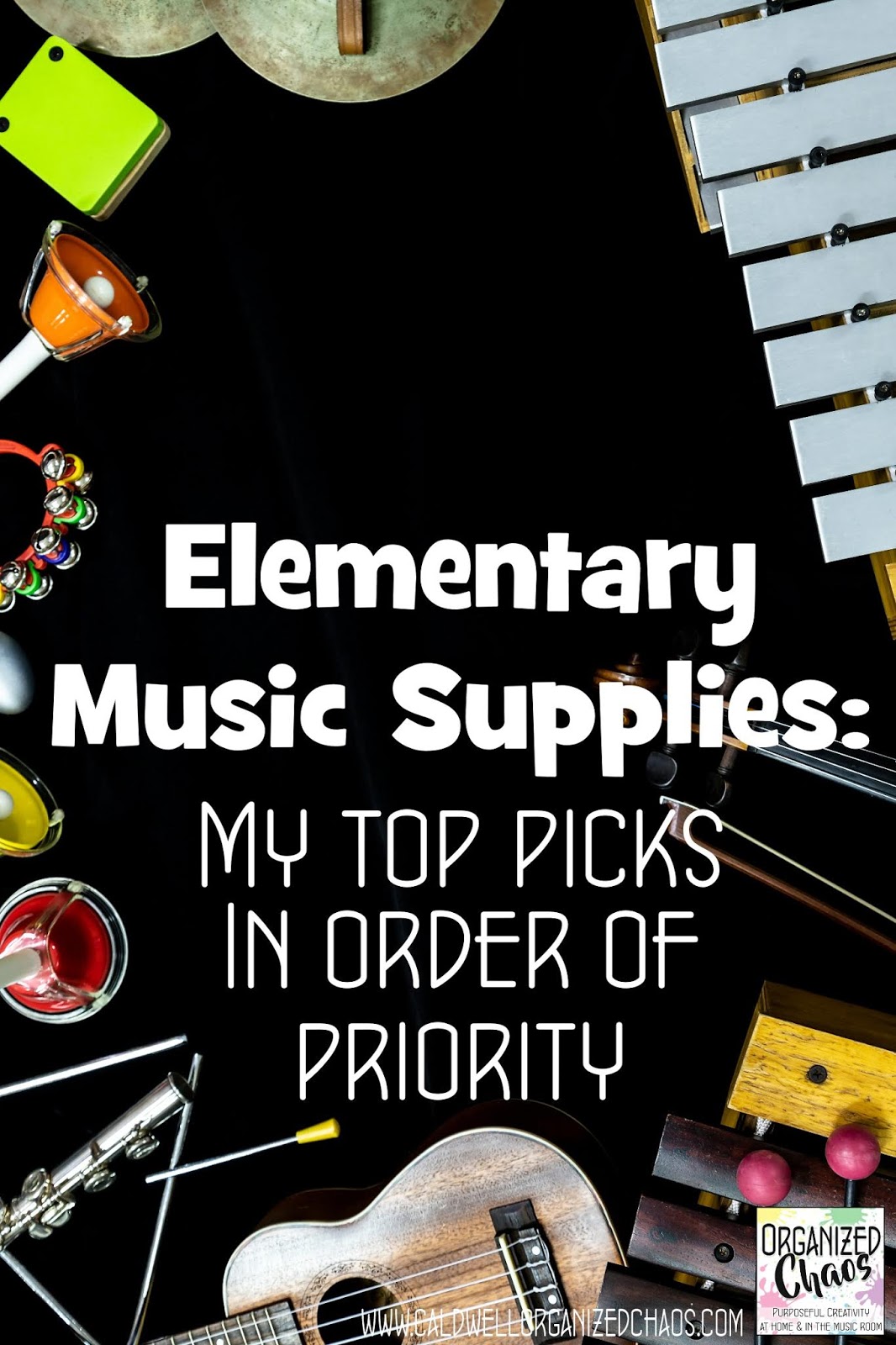
Elementary Music Supplies: my top picks in order of priority

One of the unfortunate situations in which many music teachers find themselves is needing to figure out what the most important items are to buy for their music class when they have a tiny budget and nothing (or next to nothing) available. Having been through this experience myself, and now also having some experience with different classrooms with different resources at my disposal, I thought I would share my list, in order of priority, of elementary music supplies.


I have been very lucky in terms of resources in most of the schools I've taught in, but my very first year of teaching I was the first elementary music teacher they had ever had, so I was faced with the decision, without having any real teaching experience, of deciding what was most important to get for my classroom for that first year. In every job since then I have come into a program that was already pretty well-stocked, but in every case I have found several gaping holes in inventory that just puzzle me. Why have 20 guiros and no rhythm sticks???? (True. Story.)

If I was starting from scratch, and had a limited budget each year, here is the order in which I would try to acquire things. Keep in mind, even if your school budget is very small, there are plenty of other ways to get supplies and/or funding! I have used DonorsChoose successfully to get a lot of my instruments and other "big ticket" items. Jennifer Bailey from SingToKids has more great suggestions for funding options in this post. Don't get totally discouraged by a tiny budget!

1. rhythm sticks and hand drums: class sets

These are the first things I look for in a music room and are absolutely the highest priority for me- rhythm sticks and hand drums are versatile for all elementary ages and can be used for rhythm practice, adding instrumental ostinati, and other basic lesson content we all want to cover effectively for a relatively low cost. Ideally I think the Remo Fiberskyn hand drums are the best- I like to have maybe one of each of the different sizes and then the rest in the 8" or 10" size (those seem to be the most versatile size for elementary students). For rhythm sticks I prefer wooden ones without the ridges (I know, it seems like you're getting more "bang for your buck" with the ridged ones but they're honestly more of a distraction than anything else in my opinion).

2. diatonic boomwhackers: 1 octave per 3-4 students

For a tiny budget, boomwhackers are next on the priority list so that I can have some pitched instruments. Boomwhackers are another instrument that can be used with a wide range of ages, and can be used for pitched ostinati and melodies, composition, etc. I don't think it's worth the cost to get the extended octaves, but octavator caps are a great way to expand the range at a much lower cost (and far less storage space).

3. barred instruments: at least half of a class set

Here's where a lot depends on the budget size: ideally, it's great to have a variety of barred instruments so you can have more varied timbres and have a wider range in ensemble pieces. If I could get any combination of 12 total barred instruments, I would get 2 soprano glockenspiels, 3 soprano xylophones, 4 alto xylophones, 1 bass xylophone, 1 soprano metallophone, and 1 alto metallophone. If I had enough to get a set of 24 instruments, I would add 1 bass xylophone, 1 more soprano glockenspiel and 3 alto glockenspiels, 4 more soprano xylophones, and 3 more alto xylophones.

That said, if I can only get 1 or 2 instruments at a time, I would start with soprano and alto xylophones, then glockenspiels, then bass xylophones, and add metallophones last. For the xylophones I don't recommend skimping too much on the quality, but if you can't afford any of the nicer barred instruments, these boomwhacker color glockenspiels are a great way to get some barred instruments for students to use that are worth the price (and, bonus, they're great for composing etc because the bars match the boomwhacker colors).

4. tambourines and triangles: half a class set

My next priorities for unpitched percussion instruments would be tambourines and triangles- they are, again, great for a wide range of ages, and they add a good variety in timbre to go with the rhythm sticks and hand drums. I think the tambourines with heads are definitely preferable to the headless ones. For triangles it's hard to go wrong as long as they're not the teeny tiny toy ones or the giant orchestral ones, but for me the one non-negotiable is these rubber triangle holders. They are cheap and make a huge difference for young players, because they keep the instrument relatively still while it's being held up and played.

5. scarves and bean bags: class sets

Movement props are such a great addition to elementary music lessons. Scarves in assorted colors are perfect for lower elementary, and bean bags are great for lots of singing and circle games for all ages.

6. wrist bells and egg shakers: class sets

I mostly use wrist bells and egg shakers for lower elementary students but they are great for adding variety for the younger crowd who may not be ready for some of the other instruments, and they're cheap. They're also great sounds to have for soundscapes and rhythm compositions for the older students.

7. "color" instruments: 2 of each

Beyond the basics that I want to have for all my students to use regularly, I like to have a variety of other unpitched percussion instruments for adding more variety to instrumental ensembles, giving more choices for student compositions, and adding more timbres for soundscapes. I would try to get 2 of each (you'll avoid a good amount of arguing just by having 2 instead of 1- trust me, it's worth it) in the following order: cowbell, vibraslap, ratchet, sandblocks, guiro, slapstick, cabasa, gong, sleigh bells, finger cymbals, maracas, rainstick, tone/ temple block, stir drum, wind chimes, flexatone, and agogo bells.

8. dry erase staff boards: class set

Once I have a good classroom set of instruments and movement props, music staff dry erase boards are my next priority. You can definitely use paper, or even laminated paper, but the boards are so much sturdier so students can use them in their laps, and the younger students can use them to place manipulatives on the staff as well.

9. ukuleles: class set

If you can't afford a class set you can definitely do a lot with half of a class set, but ukuleles are surprisingly affordable and they are a fantastic thing to have for older elementary and middle school students. They are a great tool for learning about chords, and older students can use them for composition and adding chordal accompaniments. These are the ones I have, which I love, and I've written a whole separate post about all my tips for ukuleles here.

10. larger drums

If you can afford them, having some larger drums to add some more low tones to your instrument selections and give your older students more variety of drumming resources is a great addition. A gathering drum works well, and tubanos add a lot of versatility.

other considerations

There are obviously some broader categories and big ticket items that are important to an elementary music classroom but are not included here: every elementary music room should have a piano, sound system/ music player, computer, and projector at a minimum, and ideally you would want an interactive board and student laptops and/or tablets as well. Recorders are another priority instrument for me, but I don't think they're worth teaching if you have to have students share a class set- students should be purchasing their own, and if you can't do that, I would stick with barred instruments and boomwhackers.

For furniture, I think decent chairs are a must- I don't like having older students sitting on the floor or even risers, because it promotes poor posture. I've been lucky enough to have these Wenger student chairs in most of my classrooms and they are ideal. Circle rugs that seat at least 24 students comfortably are also really awesome, especially if you have hard floors, but are usually quite expensive.

Texts are a whole other category as well, which I haven't touched on at all here. There are a LOT of amazing text resources that I love, but if you are on a limited budget and don't have curricular resources, this is what I would recommend buying. You can also learn about setting up your own curriculum resource for free in my Lesson Planning Made Awesome course.

Of course there are plenty of other things that are great to have: manipulatives, puppets, other movement props, conducting batons, visuals and decor, recording microphone, music notation software, etc. But when I look at what I need to be able to teach students all of the concepts I want them to learn, the priorities above are most important to me.

So now I turn it over to you: what did I miss? Which things on my list surprised you? Would you put things in a different order? Share your advice in the comments to help other teachers make the most informed decision possible!